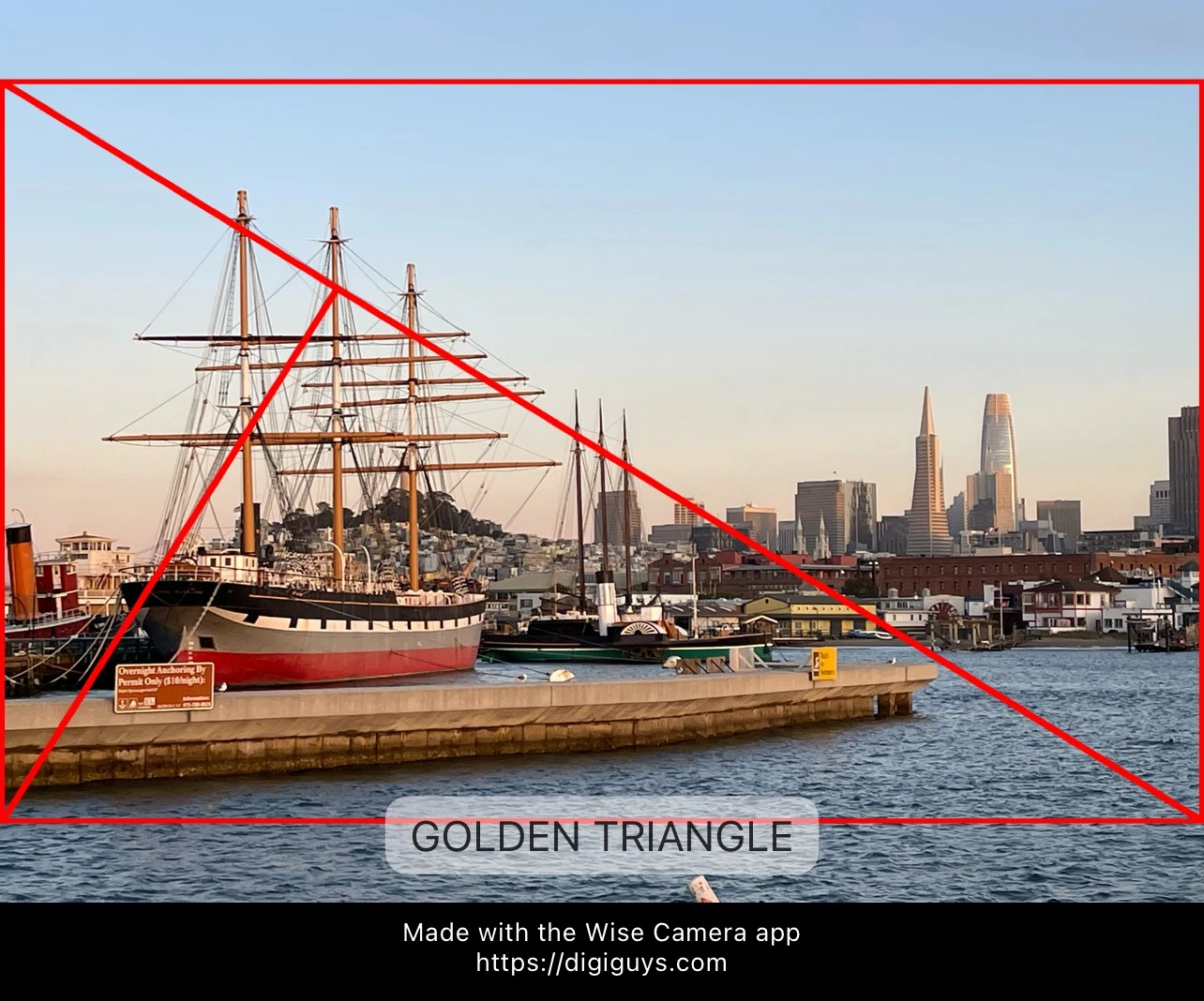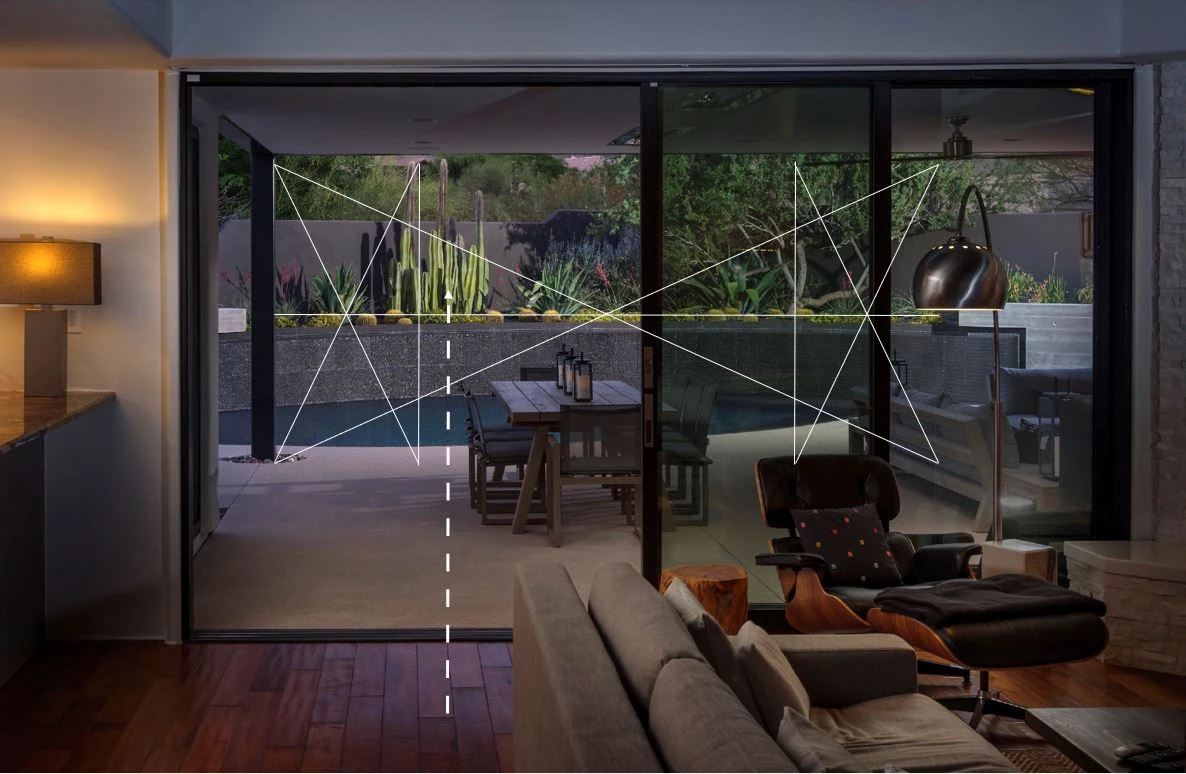
From vanishing edge pools that capture mountain vistas to outdoor sanctuaries that blend steel, glass, and desert botanicals, award-winning designer Kirk Bianchi creates waterscapes rooted in strong artistic composition. To ensure visually balanced and harmonious outdoor living spaces, Kirk relies on the Wise Camera and Wise Photos apps. Whether conceptualizing grand estates or teaching his Master Designer Methods course for Genesis, this app has become an essential tool in his creative process.
After discovering that Kirk integrates the Wise Camera and Wise Photos apps into his professional workflow, we were intrigued to learn more about how artistic composition influences his holistic approach to landscape architecture, pool design, and exterior spaces. Here's what he shared:
Where did you discover the Wise Camera and Wise Photos apps?
I was researching design principles that could elevate my landscape compositions when I stumbled upon artistic frameworks like Dynamic Symmetry and the Harmonic Armature. These systems have been used by artists for centuries, but I realized they had powerful applications in landscape design. After exploring these concepts, I searched for practical tools to implement them and found the Wise Camera and Wise Photos apps. They immediately transformed how I approach spatial composition in my designs.
How does artistic composition help you tell a story in your landscape designs?
In luxury residential waterscapes, we're not just arranging pools, plants and hardscape elements — we're crafting experiences and emotional journeys. Composition is the foundation of any successful outdoor living space. I view each viewshed from the residence as a framed artwork, with the landscape as my canvas. Strong composition guides the eye through the outdoor sanctuary, establishing visual rhythm and creating moments of discovery.
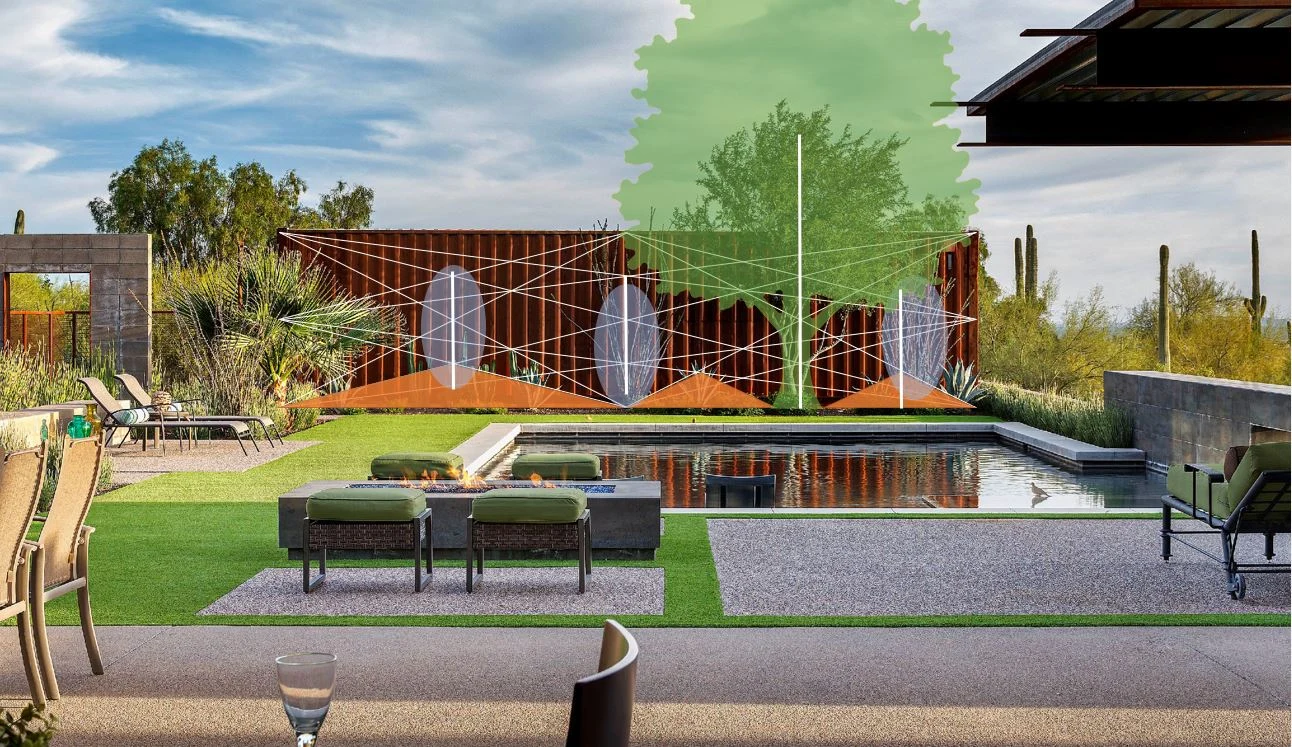
My approach was initially inspired by Japanese architecture and how it integrates and blurs indoor/outdoor spaces. Using principles like Dynamic Symmetry allows me to position focal water features, vanishing edges, and architectural elements at key intersection points. Supporting elements like specimen trees, boulder compositions, and reflective surfaces align along diagonal lines, creating a sense of natural flow. This creates waterscapes that feel both intentional and organic — they satisfy our innate desire for order while maintaining the sensual qualities that make outdoor spaces feel alive.
How do you balance design intentionality with the natural elements of landscape?
Successful waterscape design requires balancing structure with spontaneity. I strip away the noise to see beneath the surface of what a space could be. The composition frameworks provide the underlying structure — like the framing of a building — but allowing for natural elements to express themselves brings the design to life.
When I use the Harmonic Armature in my designs, the diamond shape concentrates the primary water features, spa elements, and focal points in a harmonious relationship. This creates a strong visual foundation. I then incorporate reflective surfaces, desert botanicals, and sensually smooth materials that bring warmth and life to these structured spaces. In my projects where saguaros and boulders meet steel and glass, or where cast concrete elements float over cascading water, these composition techniques actually enhance rather than conflict with the surrounding desert beauty.
How do composition tools enhance your landscape design workflow?
What I appreciate most about using the Wise Camera app is the ability to quickly capture compositional approaches on-site. With my iPhone, I can photograph a site from various viewpoints while seeing composition guides in real-time. Later in the studio, I use the Wise Photos app to analyze these different perspectives more thoroughly.
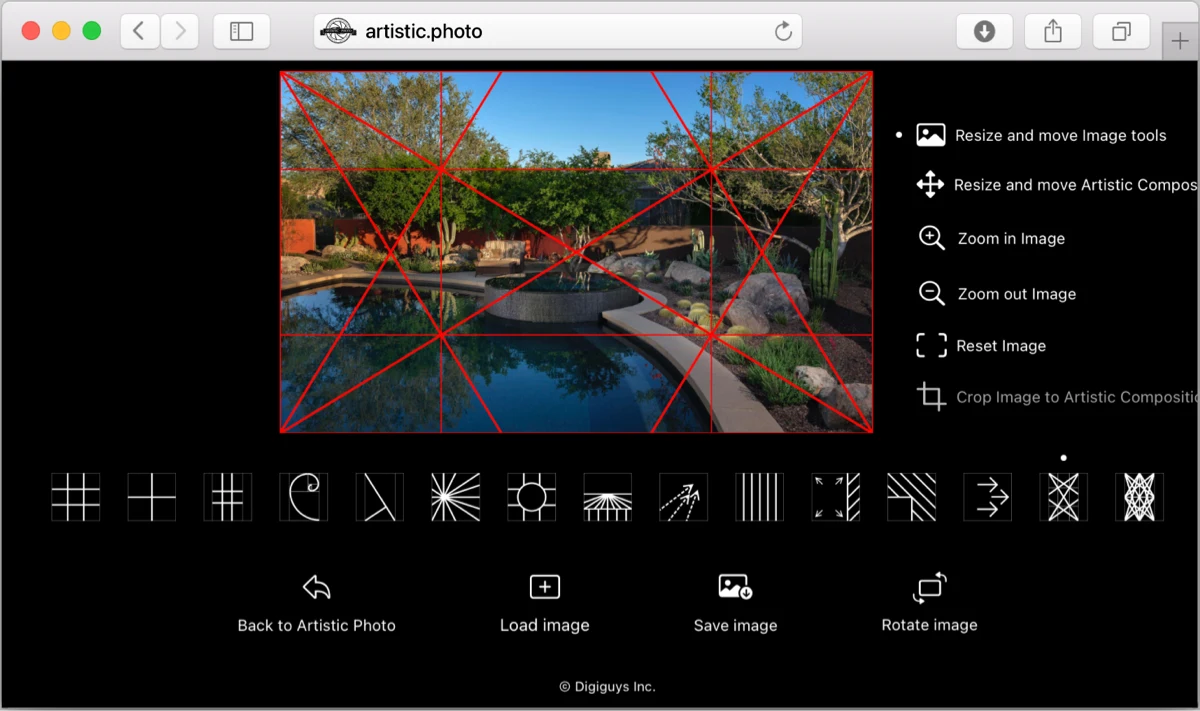
The Wise Photos web app browser version, found on the Artistic Composition website, is particularly valuable, allowing me to work on a larger screen than my iPad and examine compositional nuances with greater clarity. This workflow saves countless hours in the design process and helps me communicate my vision to clients more effectively.
Visit Bianchi Design at www.bianchidesign.com.
Full Access
Unlock All 15 Artistic Compositions
Full Access includes all 15 artistic compositions, with in-depth information, explainer videos, example gallery, guidance, storytelling, articles, and much more.
- Lifetime access
- No subscriptions
- No need to cancel
- Free Artistic Composition Poster