The Value of Genuine Visual Frameworks
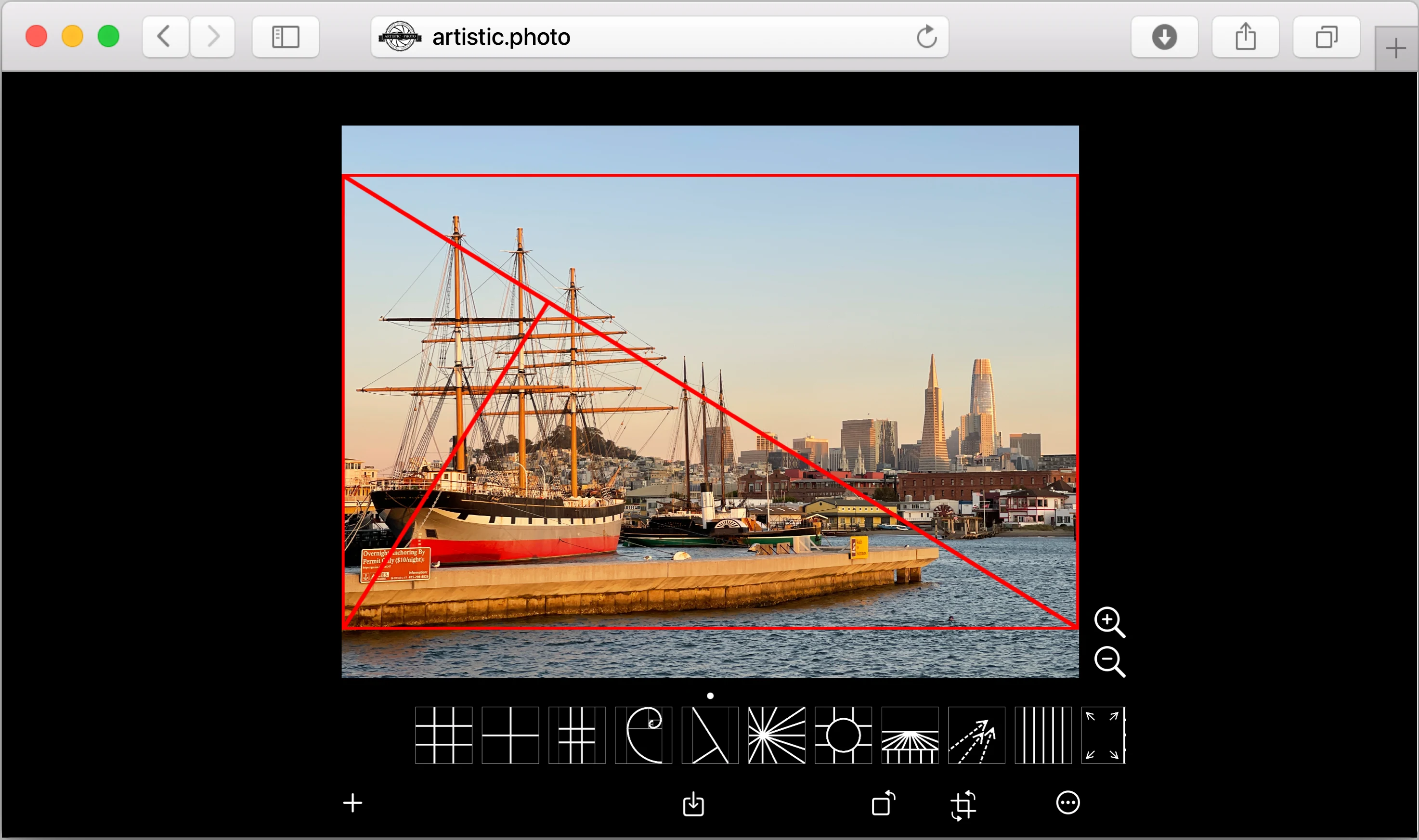
Anyone who helps others see the world through thoughtful visual frameworks, such as artistic compositions, deserves appreciation. Many aspiring artists and photographers benefit tremendously from these visual guidelines as they navigate their creative journey. We value individuals who take the time and try to share valuable content on the internet, as here in the Artistic Composition website with its 15 well-established artistic compositions used for centuries by artists. This online knowledge helps us discover, learn, grow, and improve our artistic endeavors. Sharing genuine artistic compositions on the Internet is commendable and serves the artistic community well.
Visual frameworks are about training your eye to recognize balance, harmony, visual interest, and more. Training the eye can be complex and might take years to master. Good artistic composition techniques are tools that help artists make intentional choices rather than rigid formulas to be followed blindly. When applied thoughtfully, these artistic composition frameworks give the artwork a better chance to be attractive to the eyes and minds of the viewer, interesting enough to create wonder, engaging to capture attention, and maybe even beautiful.
When History and Truth Matter
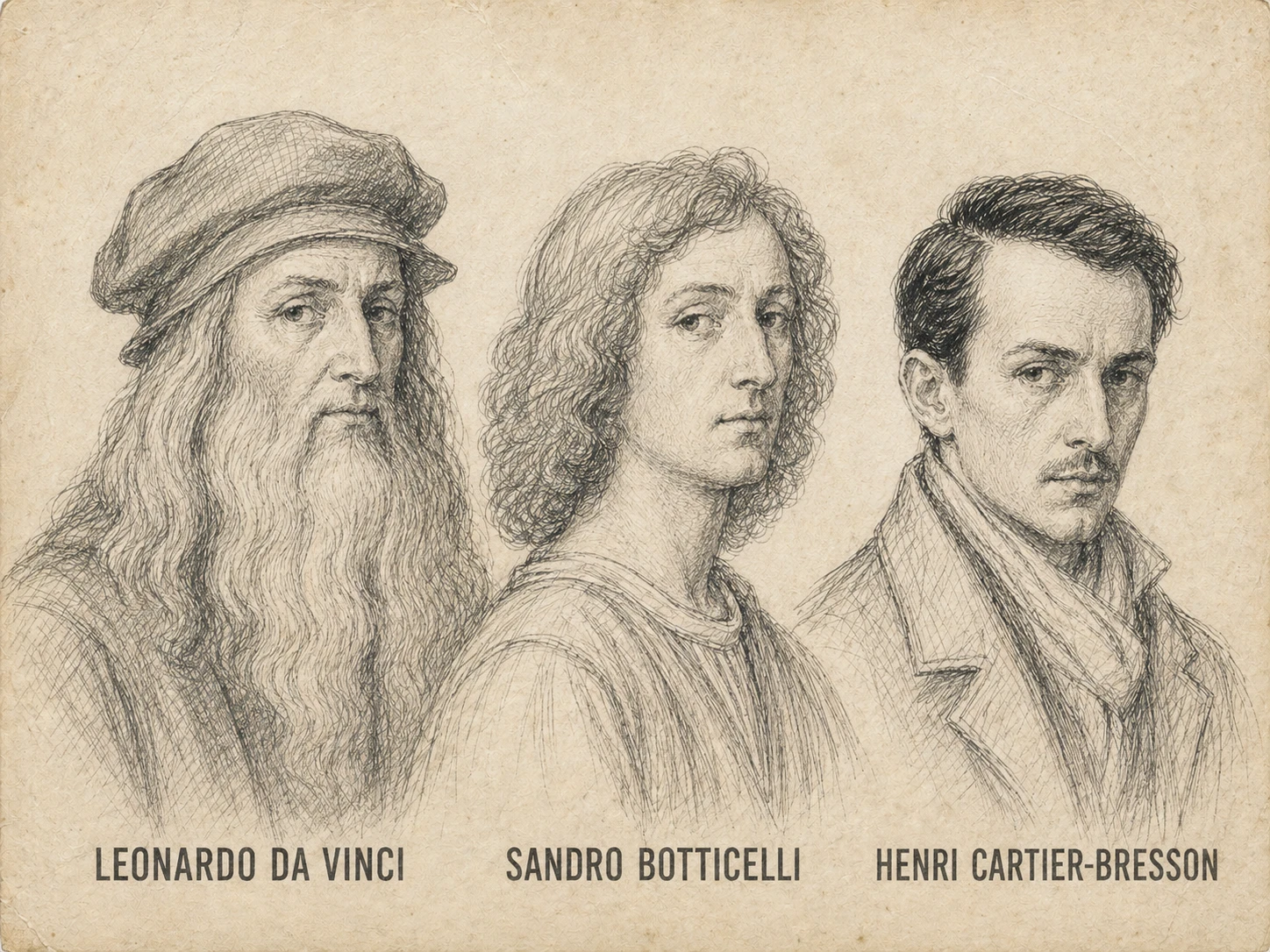
However, when it comes to artistic composition — principles that have existed for centuries, been studied extensively, and employed by masters like Leonardo da Vinci (1452–1519), Rembrandt (1606–1669), Claude Monet (1840–1926), and Henri Cartier-Bresson (1908–2004) — there's simply no need to invent fake or pseudoscientific composition techniques and spread them online.
The established principles of composition have rich historical foundations, documented usage throughout art history, and demonstrable results. These principles have been thoroughly discussed in important publications throughout history, from Leon Battista Alberti's "On Painting" (1435), to John Thomas Smith's "Remarks on Rural Scenery" (1797) which first codified the Rule of Thirds, to Jay Hambidge's "The Elements of Dynamic Symmetry" (1919), and Henri Cartier-Bresson's "The Decisive Moment" (1952).
These works, spanning over five centuries, provide clear documentation of how compositional techniques have been understood, analyzed, and applied by generations of artists.
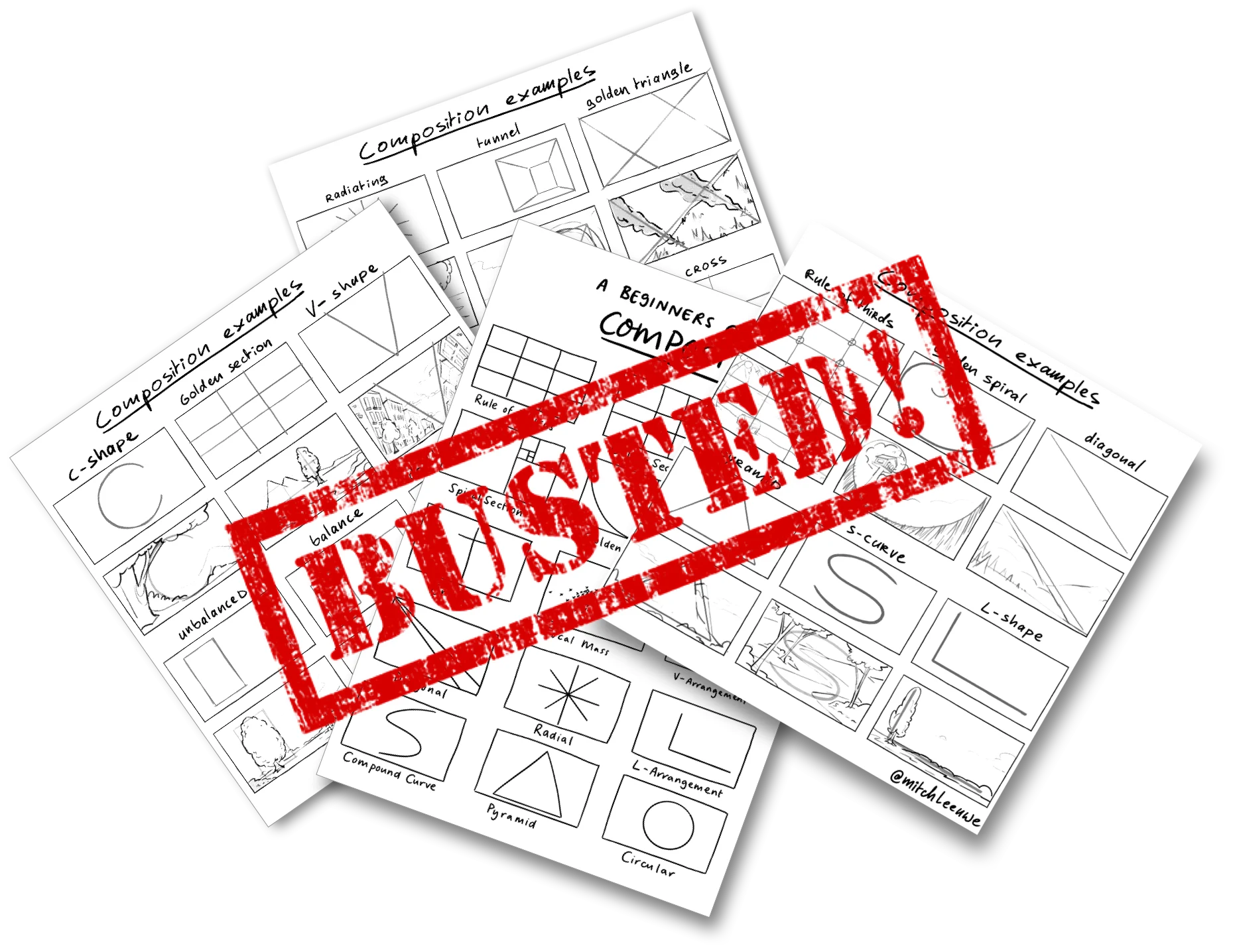
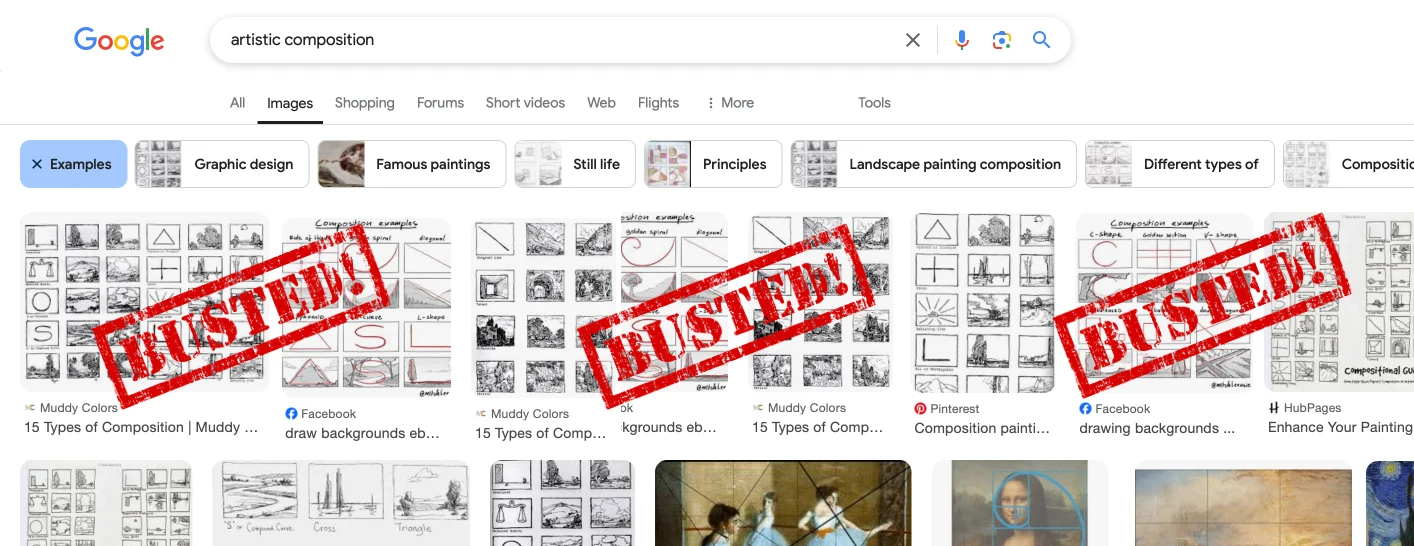
Internet Composition Myths: BUSTED!
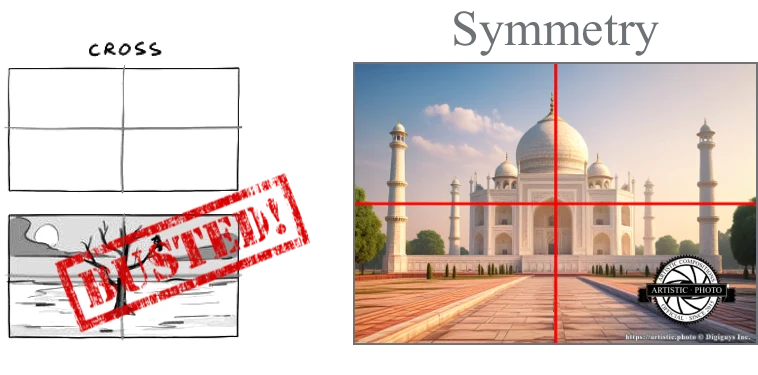
Symmetry Artistic Composition
Cross? Really? Come on! It is called Symmetry artistic composition, not cross! Symmetry creates harmony and order by dividing a scene into mirrored halves. This technique is especially effective in architectural photography, reflections, and structured compositions, offering a sense of balance and stability. For more information, explore the Symmetry artistic composition.
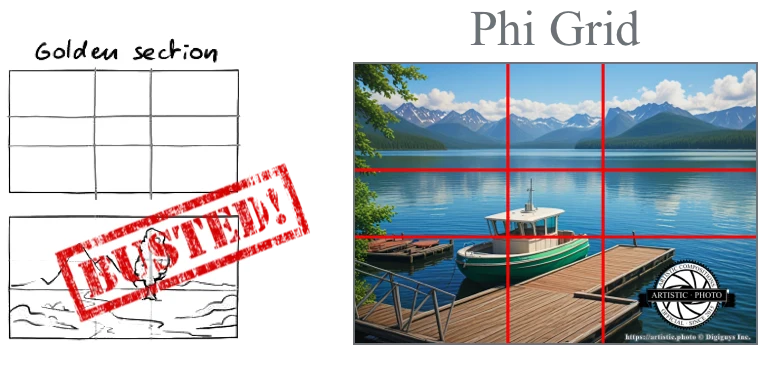
Phi Grid Artistic Composition
Golden section? Maybe, but not really, it is called the Phi Grid. Similar to the Rule of Thirds but based on the Golden Ratio used for over 2,000 years, the Phi Grid places key elements closer to the center for a more organic, naturally pleasing composition. Works well for landscapes, portraits, and balanced imagery. For more information, explore the Phi Grid artistic composition.
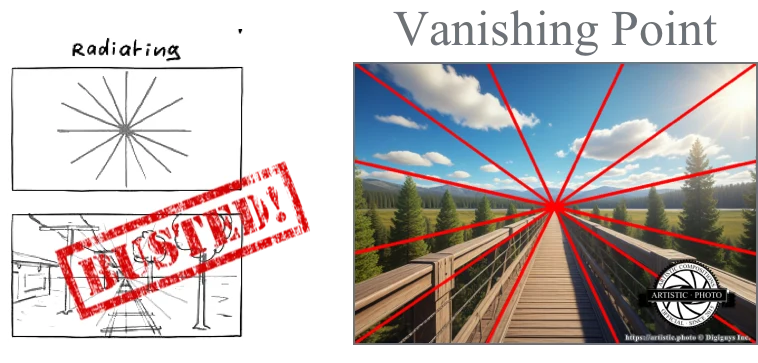
Vanishing Point Artistic Composition
Radiating? Why? Are lasers pointing to one's eyes? It's called Vanishing Point artistic composition. The Vanishing Point technique emphasizes perspective, scale, and depth by using converging lines to draw the eye into the distance. Frequently used in cityscapes, road photography, and expansive landscapes. For more information, explore the Vanishing Point artistic composition.
Composition Principles That Actually Have Historical Basis
Instead of falling for made-up techniques with pseudo-historical claims, consider exploring these well-established composition principles that actually have documented usage throughout art history:
- The Rule of Thirds: Dating back to the 18th century and formalized by John Thomas Smith in 1797. More here.
- The Phi Grid: Used in art and architecture since ancient times, documented in Renaissance painting techniques. More here.
- Dynamic Symmetry: Developed by Jay Hambidge in the early 20th century after studying ancient Greek art proportions. More here.
- Leading Lines: A fundamental principle observed in works from the Renaissance through modern photography. More here.
- Symmetry and Balance: Used systematically from ancient Egyptian art through contemporary composition. More here.
Why This Matters
Spreading misinformation about composition techniques doesn't just confuse beginners — it undermines the rich heritage of actual artistic knowledge developed over centuries. When we invent fake historical techniques, we:
- Distract learners from studying principles with genuine historical foundations
- Create confusion about what has actually been proven effective over time
- Miss the opportunity to connect with the authentic artistic traditions that inform our visual culture
- Perpetuate a cycle of pseudoscientific claims that can be difficult to unlearn
Misinformation: Misinformation on the internet is false or inaccurate information that is spread online, regardless of intent. It can mislead people, distort facts, and influence opinions or behaviors.
Moving Forward Authentically
As you develop your artistic eye, seek out resources that provide proper historical context and transparent information about the origins of different composition techniques, like the Artistic Composition website with its 15 well-established artistic compositions. Be skeptical of techniques that claim ancient origins without specific citations or that rely on overly complex systems with no historical documentation.
The genuine principles of artistic composition are powerful enough without embellishment. On the Artistic Composition website, you will find 15 artistic compositions that have guided artists for centuries because they work with our visual perception in meaningful ways. By understanding their actual origins and applications, you connect with a rich tradition of visual thinking that transcends trends and fads on the Internet.
Good artistic composition isn't about rigid formulas but about training your eye to see and understand visual relationships that have been proven for centuries. These established principles give you a framework to guide you, like a foundation, but your unique vision will always be what makes your work truly compelling.
Full Access
Unlock All 15 Artistic Compositions
Full Access includes all 15 artistic compositions, with in-depth information, explainer videos, examples gallery, guidance, storytelling, articles, and much more.
- Lifetime access
- No subscriptions
- No need to cancel
- Free Artistic Composition Poster