Fill the Frame
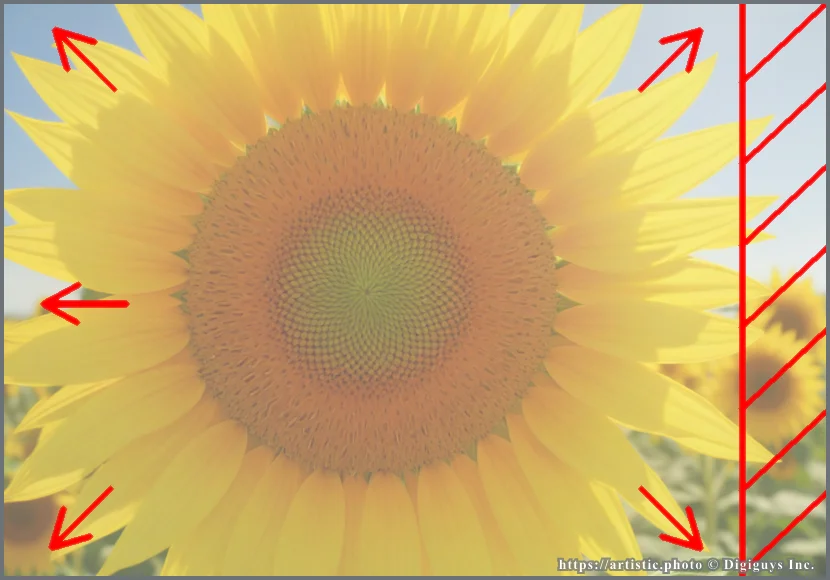
Fill the Frame is a composition technique that emphasizes the subject by getting close and excluding as much background as possible. This approach removes unnecessary clutter, ensuring the focus remains on the subject. By enlarging the subject within the frame, this technique highlights intricate details, textures, and patterns, creating impactful and dramatic compositions. It encourages boldness in framing, allowing parts of the subject to extend beyond the edges of the photo. Get very close to your subject and exclude the background as much as possible.
Frequently Asked Questions
- What does fill the frame mean in photography?
- Fill the frame means moving close enough to your subject — physically or by zooming — so it occupies most or all of the image area. The goal is to minimize or eliminate background distractions, maximize detail and texture, and create an immediate, immersive connection between the viewer and the subject.
- When should I use the fill the frame technique?
- Fill the frame is most effective for portraits (head and shoulders or face-only close-ups), flower and macro photography, food photography, and any subject with compelling texture, colour, or detail. It works especially well when the background is cluttered or distracting, removing context entirely and focusing all attention on the subject itself.
- What is the visual effect of filling the frame?
- Filling the frame creates immediacy and intimacy. The viewer is placed directly in front of the subject with no distance between them. Partial crops — where the subject extends beyond all four edges of the frame — imply that the subject is larger than the frame can contain, creating a sense of scale and power.
- How does fill the frame combine with other composition techniques?
- Even when filling the frame, you can still apply the Rule of Thirds or Phi Grid by placing the key feature of the subject — an eye, the center of a flower, the most textured area — at an intersection point rather than dead center. Filling the frame removes the background problem but doesn't eliminate the need for thoughtful placement of the subject's key elements.