Sunsets have captivated humanity for millennia, and the Pacific Ocean sunsets in California are no exception. As the sun descends toward the horizon, daylight fades into twilight, and the fiery orb slips beneath the ocean's surface, promising a new day ahead.
In this study, I explore a single sunset using five artistic composition techniques available in the Wise Camera app. The photos were taken at Ocean Beach, San Francisco, with my iPhone 13 Pro Max, using its wide camera lens (26mm focal length, f/1.5 aperture). I hope this inspires you to experiment with these compositions, wherever you may be.
A Personal Connection to Sunsets
I grew up watching sunsets over the Pacific Ocean — not in California, but in northern Chile, on the opposite side of the world. Summer days as a child were filled with beach pickleball, swimming, riding waves, and indulging in too much Fanta soda and Popsicles. When the sun neared the horizon, my friends and I would instinctively sit in quiet anticipation, savoring the moment before another day of adventures began.
There's something universally profound about sunsets. No matter where you are in the world, they symbolize hope. Whether the day was good or bad, the sunset is a gentle reminder that tomorrow is a fresh start. Nobody watches a sunset and thinks, Tomorrow will be terrible.
Over the ocean, sunsets are even more spectacular. The sky transforms from light blue to deep violet, with the horizon glowing in a solid orange band. The blinding sun softens into a warm glow before vanishing beneath the waves. If you're lucky, you might catch its rays filtering through a cresting wave, like light through stained glass.
As photographers, we have only a brief window — usually two to five minutes, depending on location — to capture this magic. Let's break down the elements of a sunset composition:
- Sun: the focal point, but not always necessary
- Horizon: dividing the sky and ocean
- Sky and Ocean: dynamic elements of color and texture
- Clouds: if present in the sky, can be a great composition element
- Reflections: wet sand on the edge of the waves and beach
Adding extra elements like a silhouetted sailboat or a pod of pelicans introduces complexity, but for this study, I kept it simple, focusing on the relationship between light, color, and form.
Now, let's examine how different composition rules can shape the visual story of a sunset.
Rule of Thirds
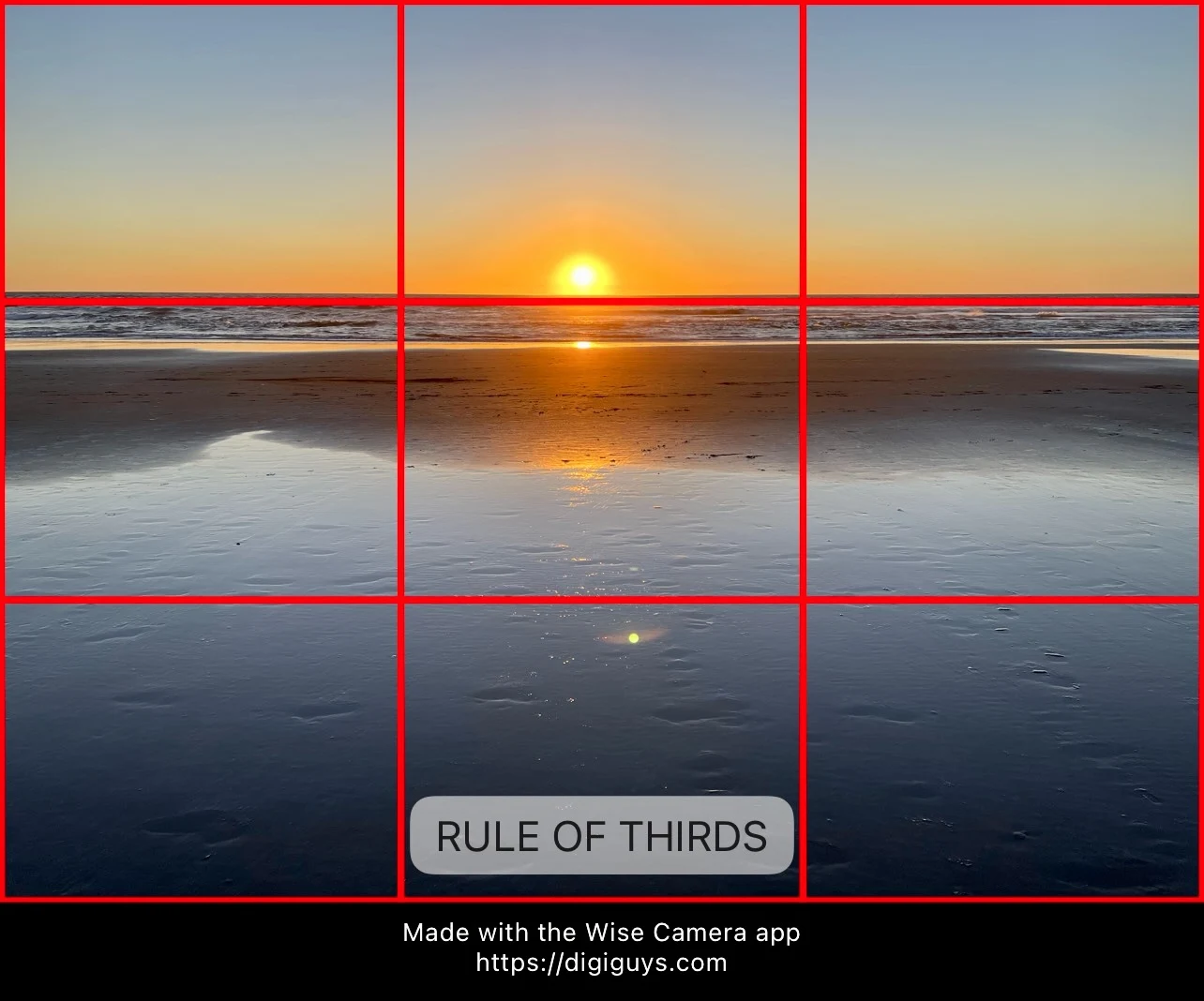
The Rule of Thirds is a fundamental principle of composition, but here, I used it in an unconventional way. Instead of placing the sun along the lower horizontal line, I framed it above the top line, drawing attention to the shimmering wet sand. Many photographers emphasize the sky in sunset shots, but I found the texture and reflections on the beach more compelling.
A Note on Lens Flares: The small bright light at the bottom center of the frame is a lens flare — a common occurrence in cameras, including iPhones, DSLRs, and mirrorless systems. It happens when bright light scatters within the lens system. While sometimes distracting, lens flares can also add character to an image.
Symmetry
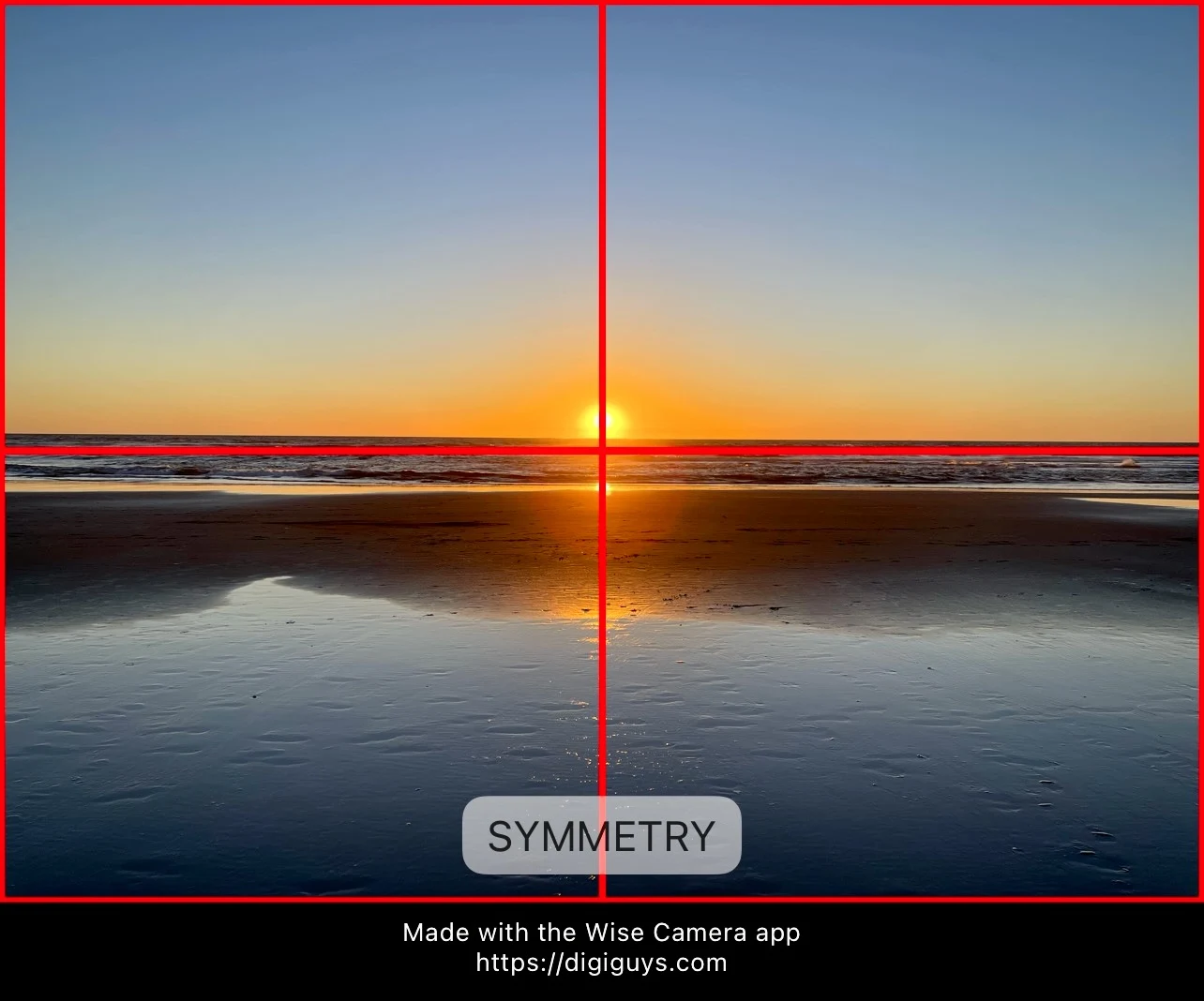
Symmetry creates a sense of balance and tranquility. In this composition, I centered the sun and horizon, dividing the frame into equal halves. This approach eliminates visual tension, offering a simple yet elegant depiction of nature's harmony.
Golden Triangle
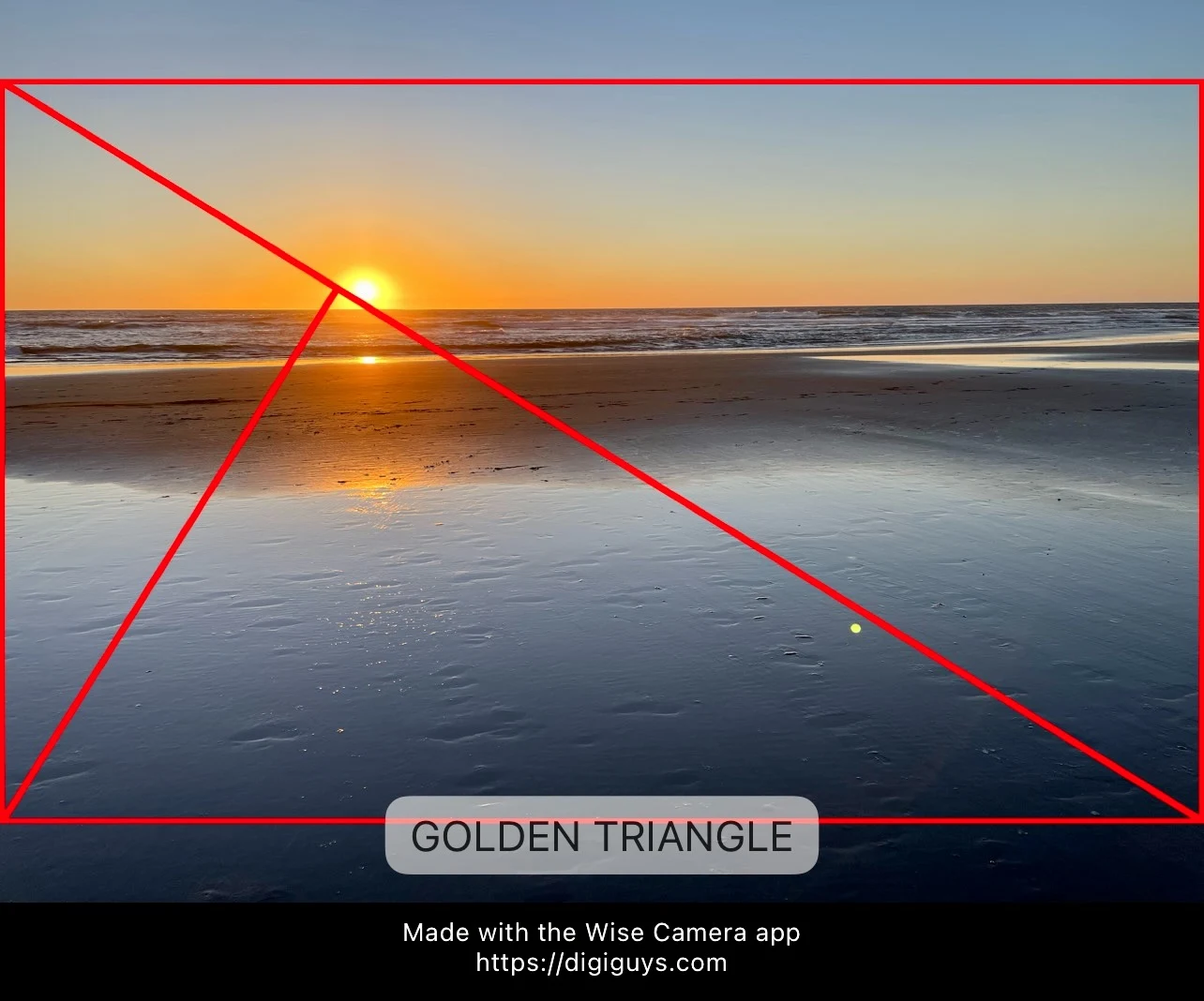
Unlike landscapes featuring trees, roads, or architecture, a beach sunset lacks obvious leading lines for depth. The Golden Triangle composition helps create a sense of distance by positioning the sun off-center, guiding the eye along a diagonal toward the horizon. In this image, the shoreline slopes to the right, enhancing the perception of depth.
Fibonacci Spiral
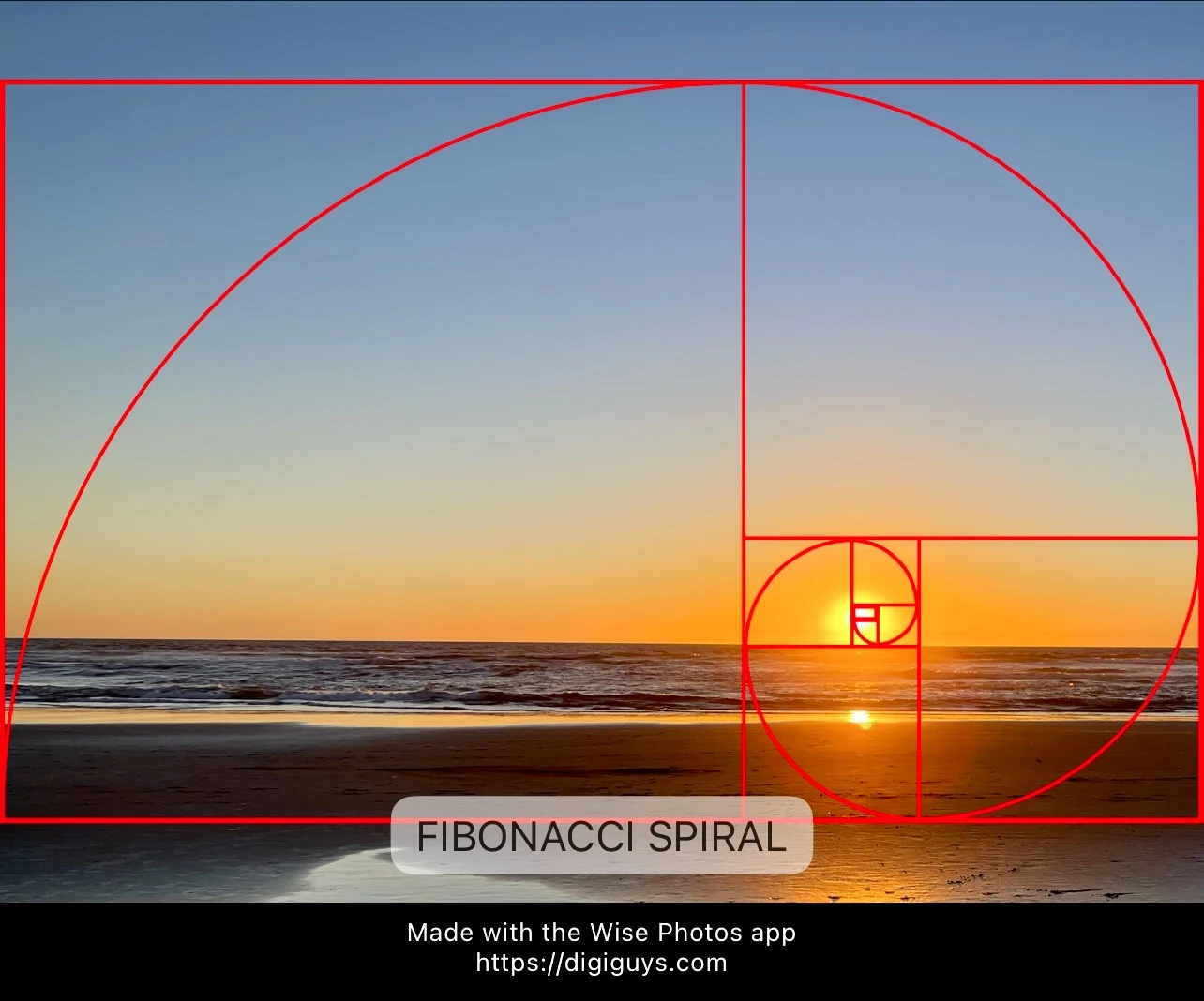
The Fibonacci Spiral is one of the most complex composition techniques, often reserved for subjects with curved lines. While the ocean's horizon is primarily linear, I used the spiral to position the sun and horizon strategically, emphasizing the sky. Placing the sun on the right side mirrors my childhood perspective of sunsets in the Southern Hemisphere, as in the Southern Hemisphere the sun leans to the north. The Wise Camera app allows for rotating the spiral to explore different arrangements, but this orientation felt just right to me.
Negative Space
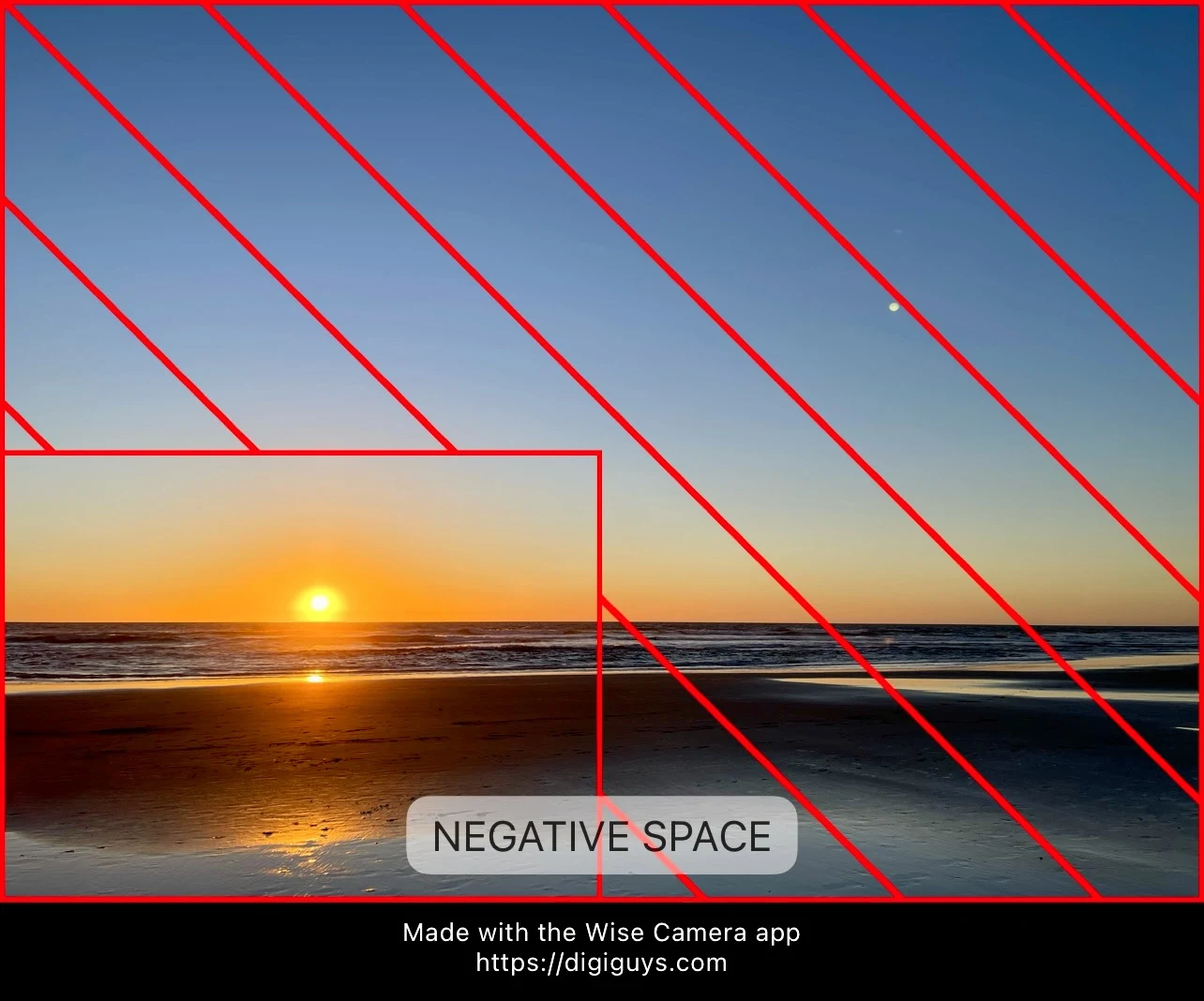
Negative Space composition is about emphasizing emptiness. In this image, the vast sky isolates the sun, evoking solitude. Had I included other elements — like a sailboat or birds — the composition would have lost its minimalist impact. If I had waited longer, the moon or stars might have appeared, altering the effect entirely.
Another Lens Flare: A subtle flare appears in the upper right quadrant. This can be edited out, but sometimes, imperfections add authenticity.
Final Thoughts
This sunset study demonstrates how the Wise Camera app can help photographers explore multiple interpretations of a scene. By framing compositions in real time, the app encourages creative experimentation and a deeper understanding of visual storytelling. Whether you're capturing sunsets or any other subject, these techniques will refine your eye for composition and elevate your photography.
Happy photography!
Full Access
Unlock All 15 Artistic Compositions
Full Access includes all 15 artistic compositions, with in-depth information, explainer videos, examples gallery, guidance, storytelling, articles, and much more.
- Lifetime access
- No subscriptions
- No need to cancel
- Free Artistic Composition Poster